
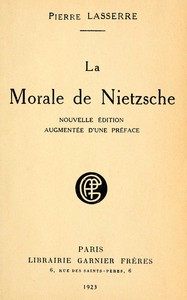
La morale de Nietzsche by Pierre Lasserre
Pierre Lasserre's La morale de Nietzsche is a book about a philosopher, not a novel with a plot. Published in 1902, it arrived as Friedrich Nietzsche's radical ideas were beginning to ripple through European thought. Lasserre, a literary critic, set out to map the rocky terrain of Nietzsche's moral philosophy for French readers who might have only heard wild rumors about this German thinker.
The Story
There's no character arc here, but there is a journey of ideas. Lasserre acts as a guide, walking us through the core of Nietzsche's challenge to traditional morality. He explains the 'will to power' as a fundamental drive in life, not just for domination but for creation and growth. He tackles the famous (and often misunderstood) idea of the 'overman'—the individual who creates their own values beyond good and evil. The 'story' is Lasserre's attempt to systematically present and interpret these explosive concepts, showing how Nietzsche sought to dismantle the old foundations of Christian and democratic ethics to make way for something new.
Why You Should Read It
Reading this isn't about getting the 'right' take on Nietzsche. It's about witnessing the first reactions. Lasserre isn't a neutral reporter; his own views color his explanation. This makes it incredibly human. You see an intelligent mind from 1902 grappling with ideas that felt dangerous and thrilling. It’s like listening in on a brilliant, slightly nervous conversation from history. You get Nietzsche's philosophy filtered through the concerns of a different era, which somehow makes both the ideas and that era feel more alive.
Final Verdict
This book is perfect for readers who already have a basic familiarity with Nietzsche and want to see how his philosophy landed in the real world of the early 1900s. It's for history of thought nerds, philosophy students looking for primary source analysis, or anyone who enjoys seeing how big ideas are translated and debated when they're fresh. It's not an easy beach read, but it's a compelling snapshot of a philosophical earthquake as it was first felt.
No rights are reserved for this publication. Knowledge should be free and accessible.
Mason Gonzalez
1 year agoI stumbled upon this title and the clarity of the writing makes this accessible. Worth every second.
Ethan Nguyen
1 year agoSurprisingly enough, the pacing is just right, keeping you engaged. A true masterpiece.
Ashley Ramirez
8 months agoI started reading out of curiosity and the author's voice is distinct and makes complex topics easy to digest. I couldn't put it down.



Margaret Brown
1 year agoJust what I was looking for.