
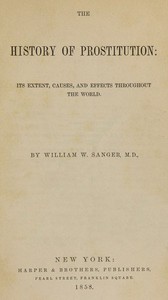
The History of Prostitution: Its Extent, Causes, and Effects throughout the…
This isn't a story with a plot in the usual sense. Think of it as the world's most intense sociological survey. In the 1850s, Dr. William Sanger was tasked by New York City to study prostitution. His method? He personally sat down with over 2,000 women in prisons and hospitals, asking them a set list of questions about their lives. The book is essentially his report, filled with statistics, direct quotes, and his own analysis. It maps out the economic desperation, the broken homes, the seduction and abandonment stories that were the real pathways into sex work.
Why You Should Read It
What grabbed me was the voices. Sanger lets the women speak for themselves, and their words jump off the 160-year-old page. You hear the defiance, the shame, the sheer practicality of their choices. It completely dismantles the lazy moralizing of the era. Sanger himself is a conflicted guide—a man of his time who is clearly shaken by what he learns. His conclusions, arguing for compassion and systemic change over punishment, feel surprisingly progressive. It's a powerful reminder that data has a human face.
Final Verdict
Perfect for anyone interested in the raw material of social history, gender studies, or urban life. If you like books that let the past speak in its own messy, unfiltered voice, this is a goldmine. It's dense and Victorian in style, so it's not a breezy read, but the content is absolutely gripping. You'll come away with a much deeper, more complicated understanding of a world we often only see through a moral or romantic lens.
You are viewing a work that belongs to the global public domain. Knowledge should be free and accessible.
Andrew Brown
1 year agoWithout a doubt, the atmosphere created is totally immersive. Exceeded all my expectations.







Patricia Torres
1 year agoGreat read!